

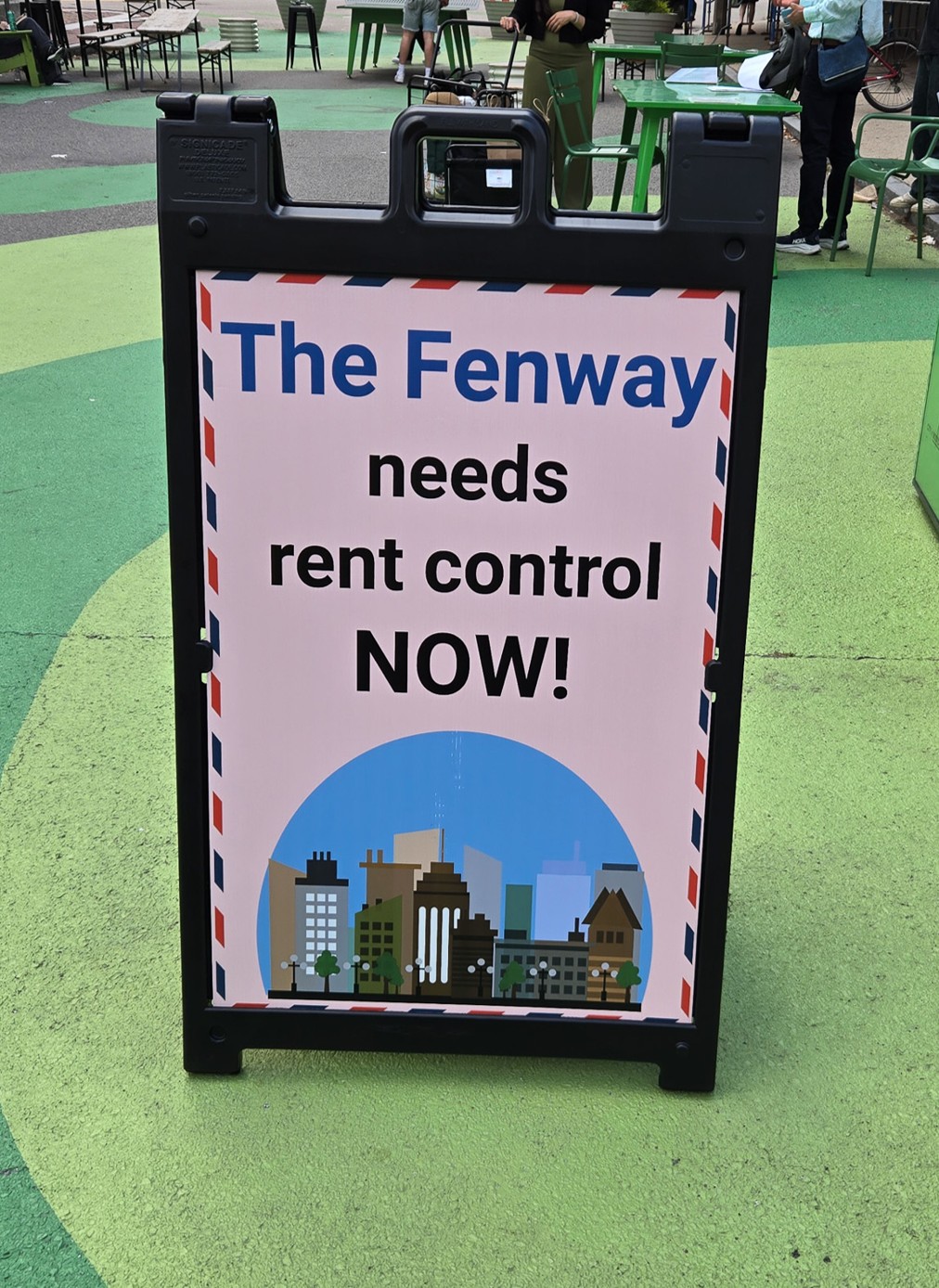
Enact S.1447/ H.2328
An Act enabling cities and towns to stabilize rents and protect tenants now!

Massachusetts State legislators could pass rent stabilization tomorrow if they wanted!
Boston needs and wants rent control (an overwhelming portion of Boston supports), but an outdated state ban means that landlords can raise rents as much as they want. Boston heavily voted against that ban!
Today, renters across the city routinely deal with rent increases as high as $800 per month! Rent increases should not be the reason someone is displaced! It doesn’t have to stay that way. State Legislators need to come together to pass bill S.1447/H.2328, a common-sense, modern rent control so that working families, seniors, and every other Bostonian can afford to stay in their community!
Take Action
Join us in our fight for rent control! Connect with your legislator! Talking points here.
Senator Lydia Edwards
Lydia.Edwards@masenate.gov
State House
24 Beacon Street Room 413-A
Boston, MA 02133
Phone: 617-722-1634

Senator Will Brownsberger
William.Brownsberger@mastate.gov
State House
24 Beacon Street Room 319
Boston, MA 02113
Phone: 617-722-1280

Representative Jay Livingstone
Jay.Livingstone@mahouse.gov
State House
24 Beacon Street Room 146
Boston, MA 02113
Phone: 617-722-2011


Don’t Know Your Legislator? Find out via this link!
Share Your Story: Why does Massachusetts Need Rent Control?
“My current 12-month lease totals $41,700, which is more than half of my annual salary after taxes… I don’t think I’ll ever forget the desperate feeling like I was trapped because I couldn’t afford to live in Boston [before I got a higher-paying job], but I couldn’t afford to leave either. I’m dismayed at the thought of all the people in Boston who are still in that situation and will probably be for the rest of their lives because housing costs rise at a seemingly exponential rate.”
– Fenway resident
Want help telling your story? Contact Leo at 857-302-0523 or lruizsanchez@fenwayforward.org.

Rent Stabilization: Separating Myths from Facts
Myth #1: Rent stabilization leads to poor housing conditions.
FACT: All tenants in Massachusetts have a legal right to safe, habitable housing, regardless of the rent amount. But in reality, many tenants are already forced to live in substandard conditions because they are afraid to speak up for their rights, they knowing their landlord can retaliate with a drastic rent hike, no-fault eviction, or both.
These bills, S.1447 / H.2328, directly address this by requiring just cause eviction protections, which would prohibit evictions for no reason and help ensure tenants can advocate for safe, livable homes without fear of losing them or facing retaliatory rent hikes.
As a local option bill, it gives cities and towns the flexibility to craft rent stabilization policies that make sense for them to ensure buildings remain in good condition while still protecting tenants. This bill will provide greater protections to tenants and help guarantee their rights to safe and habitable housing.
Myth #2: Rent stabilization disincentivizes new housing construction.
FACT: The primary factors affecting new housing development are well understood — exclusionary zoning, high costs of material and labor, and fluctuating interest rates. The claim that rent control discourages new construction is not backed by data.
In order to ensure our policy encourages continued development, this bill includes a five-year exemption for new construction, giving builders the certainty they need while still protecting tenants from displacement.
Myth # 3: Rent stabilization hurts small landlords.
FACT: This bill is designed to protect tenants without harming small, local landlords. In fact, the real driving force behind rising rents in Massachusetts isn’t mom-and-pop landlords — it’s corporate investors and out-of-state developers who prioritize profit over community by buying up properties, increasing rents, and evicting tenants who cannot pay.
This bill also specifically exempts owner-occupied buildings with four or fewer units, ensuring that homeowners who rent out part of their properties aren’t unduly burdened. The bill still allows landlords to increase rents in order to maintain their properties; it simply limits the amount of the increase to the rate of inflation up to a reasonable cap, while holding larger, profit-driven landlords accountable.